/ GUIDE
LAUNDROMAT
WEBSITE CHECKLIST
Before choosing a website builder or commissioning a redesign, decide what customers need to learn and what must happen after they click. This checklist turns those decisions into a usable laundry website.
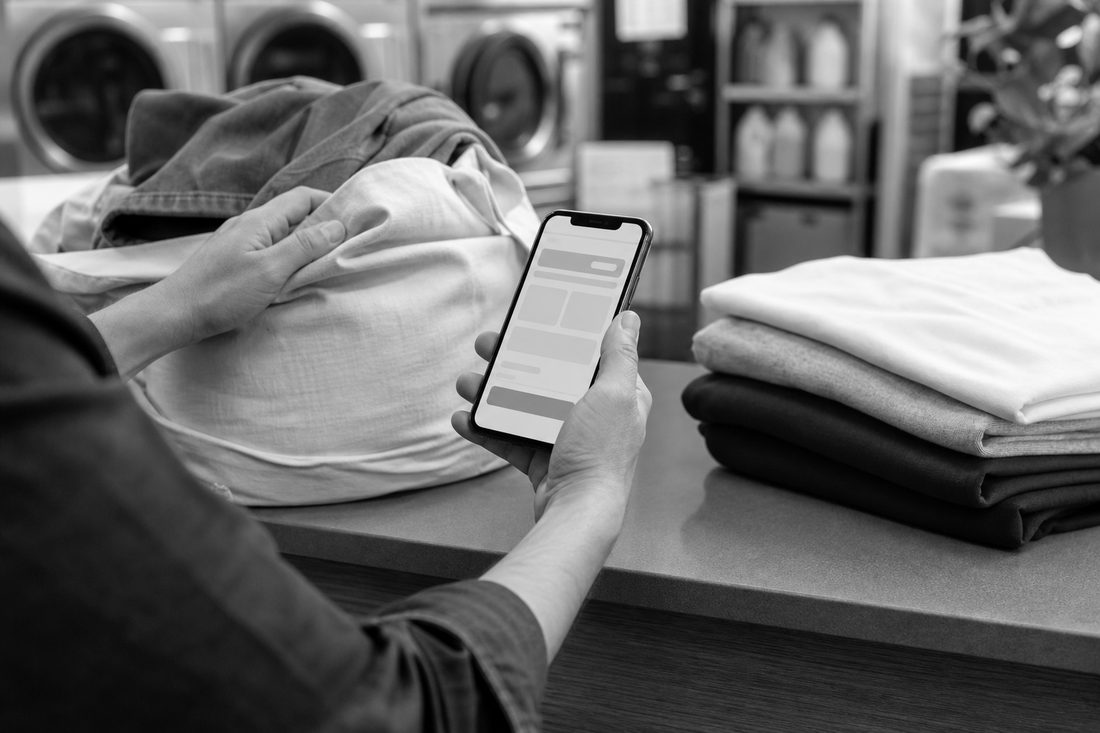
A laundromat website needs clear services, accurate prices or price rules, hours and directions, a usable phone experience, and a reliable next step. For wash-and-fold or pickup businesses, that next step also needs to explain availability and connect to the system that receives the order.
Use this guide to scope a new build or audit an existing site. For the wider search plan, start with our laundry SEO guide. The examples below are planning examples unless a named case study is linked.
Give each customer a clear starting point
A self-service customer needs machine sizes, payment options, opening hours, last-wash time, parking and directions. A drop-off customer needs acceptance hours, turnaround and pricing. A pickup customer needs coverage, collection windows, minimum charges and scheduling. Those journeys should be visible from the main navigation.
Create a dedicated page when a service has enough distinct information to justify one. A small operator can explain closely related options on one useful page. Do not manufacture separate pages for every payment method or town name.
- Self-service: equipment, payment, access and visit information.
- Wash and fold: what is accepted, pricing rules, turnaround and collection.
- Pickup and delivery: addresses served, schedules, minimums and order changes.
- Commercial laundry: accepted account types, operating capacity and an inquiry process, when offered.
Google recommends descriptive links and a logical site structure in its SEO Starter Guide. Put the service name in the link and send it directly to the relevant page.
Make the price understandable before checkout
Show how the price is calculated, including minimum order charges, separately priced items, delivery fees and rush options when they apply. If the final amount depends on a measured weight or garment inspection, explain that before asking for payment information.
For example, a wash-and-fold page can display its per-pound rate, minimum charge and excluded items next to the booking link. This is a recommended layout, not a claim that every laundry must use weight-based pricing. Use the operator's actual terms.
Distinguish an estimate from a final charge. A button labeled “Get an estimate” should not silently create a paid order. Have the person who runs the counter approve the wording so the website and staff give the same answer.
Test the visit on an ordinary phone
Open each service page on a small screen. Read the price, find the address and tap the phone number without zooming. Check that a sticky banner does not cover the booking button, keyboard or form errors. Use real labels on inputs; a placeholder that disappears while typing is not enough.
Ask a person unfamiliar with the site to find the last-wash time and schedule a pickup. Record where they hesitate. That observation is more useful for this task than a design preference about whether the button should be rounded.
Google uses the mobile version of a site's content for indexing. Keep meaningful service information available on mobile as well as desktop; see its mobile-first indexing guidance. Compress images, specify their dimensions, and remove scripts that do not serve a customer need.
Define what a booking actually means
Decide whether the site will collect an inquiry, request a time slot or confirm an order. Label the action accordingly. A successful form submission does not necessarily mean the operator accepted a pickup.
- Check service availability for the customer's address.
- Show valid collection windows and order terms.
- Collect the information the operator needs to fulfill the job.
- Return a clear confirmation or explain that staff must approve the request.
- Provide a way to correct an address, reschedule or contact the business.
These are requirements to review with the booking provider, not features every POS includes. Our laundry online booking guide covers the technical and operational acceptance checks.
Show the business customers will actually use
Use current photographs of the entrance, machines, counter and relevant work. Label representative imagery so it does not look like proof of a client's facilities. Publish reviews with appropriate permission and attribution; do not invent testimonials or turn an internal target into a customer result.
Samuel's Freshly Folded case study separates a broader website and integration relationship from a six-month SEO engagement. Its traffic captures document search and visitor metrics, not the conversion effect of a particular button. The Mamaw's Laundry case study describes SEO improvements on an existing site without a rebuild. The useful lesson is to establish the actual problem before replacing a working website.
Keep local information consistent and crawlable
Give each real customer-facing store a page with its address, hours, contact details and useful access information. A delivery service should explain actual coverage and collection schedules. Do not list a residential address as a walk-in store.
Link the appropriate website destination from the eligible Google Business Profile. Use readable HTML for the core service information and make sure important pages are linked, indexable and have the intended canonical URL. Structured data should describe the content visitors can see.
Google's guidance for AI features points site owners to the same SEO fundamentals. Clear answers and accessible pages can support discovery; they do not establish a guaranteed ranking or citation.
Measure the completed action
Keep phone-link clicks, inquiry submissions and confirmed bookings separate. A phone-link click does not prove a connected call. A visit to a third-party scheduler does not prove an order. Ask which events the provider can expose and validate them with controlled test orders.
When a booking journey crosses domains, review the provider's support for analytics and consent. Google's cross-domain measurement documentation explains the shared-tag requirements. If the destination cannot support them, record the outbound handoff and disclose the resulting measurement gap.
Use an acceptance checklist before launch
- All service links, phone links, maps and form destinations resolve correctly.
- Pricing, hours, coverage, cancellation terms and confirmations agree with the operation.
- A valid order, unsupported address, unavailable slot and failed submission each produce a useful response.
- Mobile layouts remain usable with the keyboard open and text enlarged.
- The owner controls the domain, hosting, repository and relevant business accounts.
- Analytics distinguish test activity from production orders and avoid collecting unnecessary customer details.
- Canonicals, sitemap entries, redirects and crawl access have been checked.
Save the checklist with the launch date and the person responsible for each open issue. If the site is already online, fix a broken order path before adding more traffic. For help scoping the work, review our laundry website design service, POS integration work, or request a website audit.
- Published
- Updated
- Written by
- Samuel Godfrey
- Focus
- Laundry websites and search
/ QUESTIONS
- Do I need a custom website or a website builder?
- Choose based on the service pages, booking integration, editing needs, performance and account ownership you require. A builder can be sufficient if it supports those requirements; custom development is useful when it resolves a specific limitation.
- Should a laundromat website show prices?
- Publish actual prices or explain how estimates and final charges are determined. Include applicable minimums and fees so customers can evaluate the service before booking.
- Does every laundry service need online booking?
- No. Self-service customers may primarily need accurate visit information. Drop-off and pickup businesses should choose an inquiry or booking path that matches their operations.
LAUNDRY·SEO
LET’S GROW
YOUR LAUNDRY
BUSINESS
Share a few details about your business, our team will come back with a short read on what’s costing you orders.
CONTACT/